

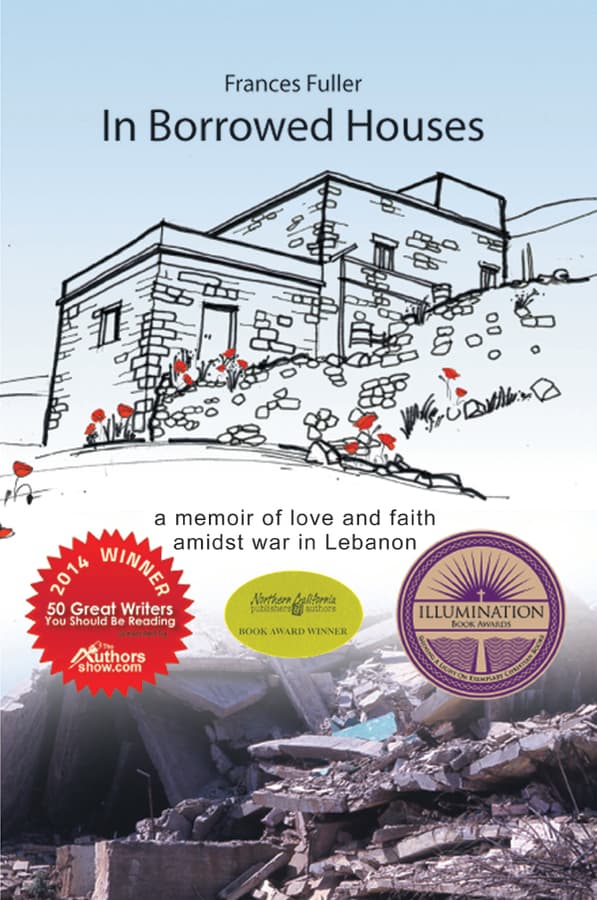
Frances Fuller, a bestselling author who spent thirty years living and working in Jordan and Lebanon, presents a perspective on Middle Eastern affairs informed by direct experience rather than distant analysis. Her recent writings challenge conventional narratives surrounding the Palestinian-Israeli conflict by emphasizing historical context and personal testimony over media-driven portrayals. Fuller argues that a deeper understanding requires moving beyond what she describes as propaganda, urging readers to consider the lived realities often omitted from mainstream discourse.
Central to her analysis is a critique of foundational narratives, specifically challenging the notion of 'A land without a people for a people without a land'. She draws from her time in the region to highlight the experiences of Palestinians displaced during the establishment of the state of Israel, framing this history as crucial for comprehending present tensions. Fuller details the ongoing impact of this displacement, connecting it to contemporary issues such as the expansion of Jewish settlements in the West Bank and the legal and infrastructural disparities faced by Palestinian communities.
Her work meticulously outlines the practical challenges to Palestinian statehood, citing disparities in access to resources, water rights, and the application of Israeli law. These observations, grounded in her long-term residency, provide a granular view of the conflict's human dimensions, contrasting with broader geopolitical summaries. Fuller contends that these on-the-ground realities are frequently overshadowed by simplified political narratives, a gap her writing seeks to address.
Parallel to her geopolitical commentary, Fuller explores the universal human experience of aging in her second memoir, titled 'Helping Yourself Grow Old'. She shifts from the macro-scale of regional conflict to the intimate scale of personal life, offering a candid account drawn from her own later years. The book addresses themes like grief, loneliness, and the continuous pursuit of personal growth, presenting aging not as a purely academic subject but as a lived, relatable process.
This memoir is positioned as a resource for a wide audience, including individuals nearing retirement, those already retired, and family members supporting aging parents. By intertwining her reflections on the Middle East with her personal narrative on aging, Fuller's collective work underscores the importance of firsthand, empathetic understanding in addressing both vast political struggles and fundamental human transitions. Her contributions offer a consolidated viewpoint that privileges sustained personal engagement and narrative depth over detached reporting, providing alternative frameworks for considering some of the most persistent issues in international affairs and human life.