

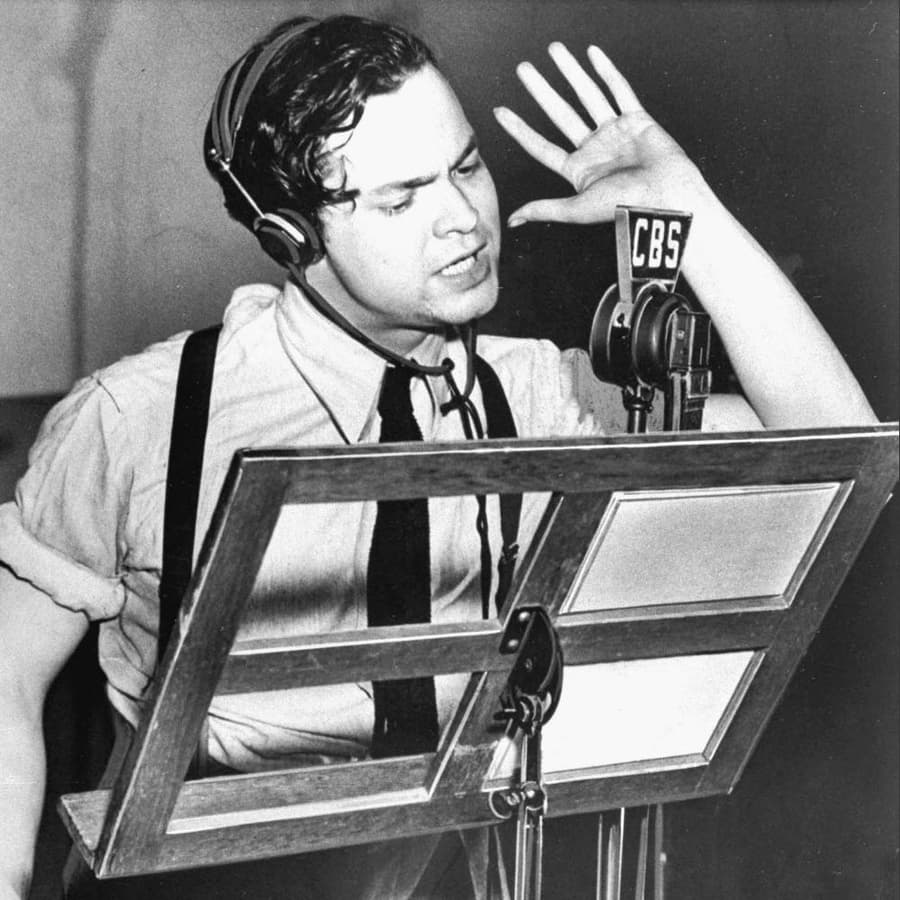
A new book by bestselling author William Elliott Hazelgrove reveals the far-reaching consequences of Orson Welles' infamous 'War of the Worlds' radio broadcast, documenting a level of nationwide panic previously underreported. 'Dead Air: The Night Orson Welles Terrified America,' published by Rowman and Littlefield, offers a comprehensive account of the chaos that ensued on October 30, 1938, when Welles' dramatization of H.G. Wells' novel convinced many Americans that a Martian invasion was underway.
Hazelgrove's research challenges the long-held belief that the broadcast's impact was primarily confined to the East Coast. By examining newspapers from across the country, the author has uncovered numerous incidents that paint a picture of widespread panic and confusion. The book recounts harrowing stories of individuals caught up in the hysteria, including a woman who contemplated suicide to avoid death by Martians, a man who recklessly drove with people tied to his car's exterior, and farmers who fired shotguns at a water tower mistaken for an alien vessel.
These accounts provide a vivid illustration of the broadcast's psychological impact on listeners nationwide. Hazelgrove's work is particularly relevant in today's media landscape, where concerns about misinformation and 'fake news' are prevalent. The author draws parallels between the 1938 incident and contemporary challenges in discerning truth from fiction in news media, highlighting the enduring importance of media literacy and critical thinking.
The book details how Welles' innovative use of a breaking news bulletin format, complete with on-air 'deaths' and strategic moments of silence, contributed to the broadcast's believability. This technique, revolutionary for its time, demonstrates the power of media to shape public perception and behavior. 'Dead Air' also explores the broader implications of the broadcast on the radio industry and media regulations. The panic it caused led to significant changes in how broadcasters approached fictional content, influencing media practices that continue to this day.
Hazelgrove's research methodology, which involved extensive archival work and analysis of contemporary newspaper reports, offers a more comprehensive understanding of the event's national impact. This approach has allowed the author to present a more nuanced and geographically diverse account of the broadcast's effects than previously available. The book's release comes at a time when discussions about media influence and the spread of misinformation are particularly pertinent.
By examining this historical event in detail, Hazelgrove provides valuable insights into the mechanisms of mass panic and the responsibilities of media producers and consumers alike. As 'Dead Air' hits the shelves, it promises to offer readers a fresh perspective on a pivotal moment in American media history. The book not only recounts the events of that fateful night but also invites readers to consider the ongoing challenges of navigating an increasingly complex media environment. Readers can learn more about the book and the author's other works at www.williamhazelgrove.com.