

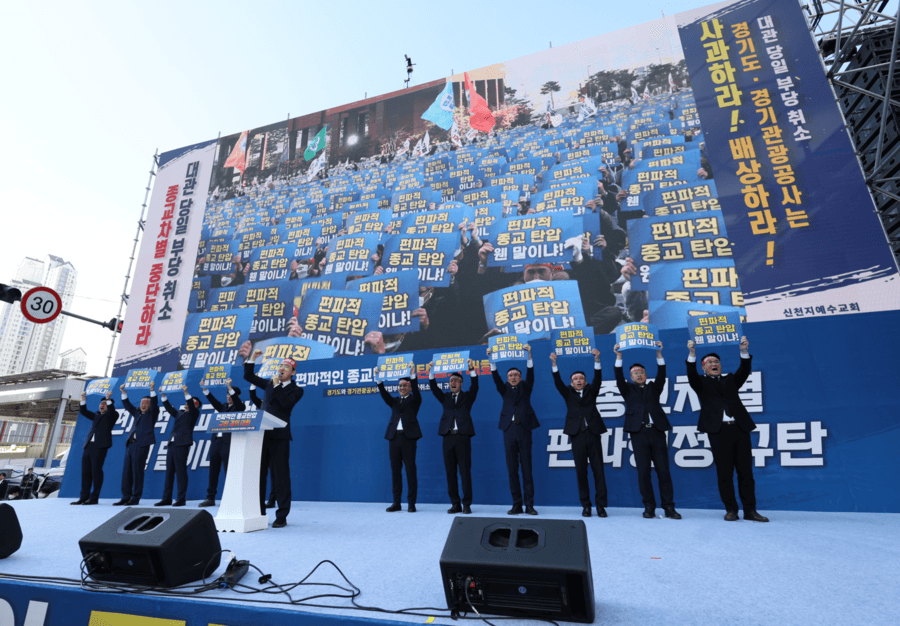
The Gyeonggi Tourism Organization's abrupt cancellation of a major religious event at Paju Imjingak Peace Park on October 30, 2024, has sparked significant public dissent, with approximately 25,000 protesters assembling near the Gyeonggi Provincial Government offices on November 16. The event, organized by Shincheonji Church of Jesus, was set to host 6,400 religious leaders and international members after a year of preparation by 11,000 staff members. The cancellation came just one day before the scheduled gathering, forcing organizers to quickly remove stage equipment, chairs, and other materials from the site.
Shincheonji has accused the Gyeonggi Provincial Government and Gyeonggi Tourism Organization of religious oppression, claiming their event was singled out while other scheduled events at the Peace Park proceeded. Lee Gi-won, General Secretary of Shincheonji, expressed frustration, stating they had repeatedly received assurances from authorities that the event would not be canceled, even when Paju was designated as a 'danger zone' due to tensions with North Korea. The organization argues the late notice demonstrates disregard for laws and principles by authorities.
The Gyeonggi Tourism Organization defended its decision, citing the park's proximity to the North Korean border and heightened inter-Korean tensions. A representative explained the event included elements such as aerial balloons, drones, and fireworks that could potentially provoke North Korea. This incident occurs against the backdrop of increased security measures, as Gyeonggi Province designated Paju, Gimpo, and Yeoncheon as 'danger zones' on October 15, implementing measures to prevent North Korean leaflet distribution.
In response to the protest, local police deployed 400 officers from six mobile units to ensure safety and manage traffic flow around Gwanggyo Central Park and nearby roads. Despite the large turnout, no significant clashes were reported during the demonstration. The protest highlights the delicate balance between national security concerns and religious freedoms in South Korea, particularly in areas close to the North Korean border, and underscores challenges faced by local authorities in managing large-scale events in sensitive locations.
Shincheonji has announced plans to send an official letter to the Gyeonggi Provincial Government demanding a formal apology and compensation for damages, signaling potential escalation in the conflict. The incident raises important questions about religious organizations' rights to assemble and express beliefs in politically sensitive areas and highlights the need for clear communication and consistent policies regarding event permissions. As tensions continue, the outcome could have significant implications for future religious and cultural events in Gyeonggi Province and other areas near the North Korean border, calling for careful balance between maintaining security and respecting religious groups' rights to practice their faith.