

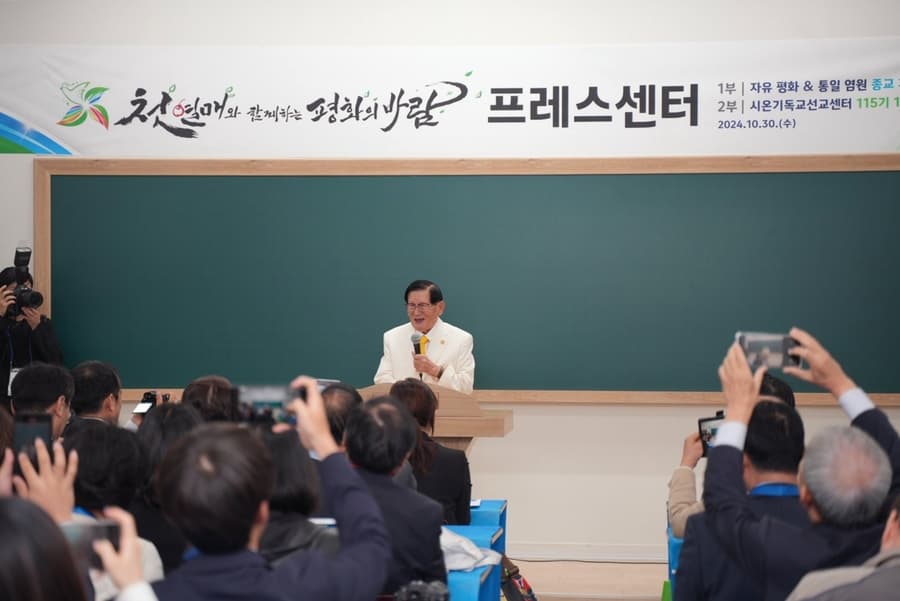
The cancellation of Shincheonji Church of Jesus' 'Religious Leaders Forum and Graduation Ceremony' by the Gyeonggi Tourism Organization has ignited a significant debate about religious freedom and constitutional rights in South Korea. Chairman Man-hee Lee of Shincheonji Church has publicly criticized what he describes as religious oppression after the event was canceled without prior notice on the day it was scheduled to occur at Imjingak Peace Nuri in Paju. The organizers were forced to hastily relocate to Shincheonji Cheongju Church, causing substantial logistical challenges and financial losses estimated at over 20 billion won.
Chairman Lee emphasized the constitutional principle of separation between politics and religion, stating that "it is in our country's constitution that politics and religion must be separated." He further invoked Article 1 of the South Korean Constitution, which declares that "all sovereignty belongs to the people," questioning whether any authority has the right to disregard the law. The event, organized by Shincheonji Church's Zion Christian Mission Center in collaboration with the National Unification Buddhist Central Council, had already brought overseas participants and graduates to the country when the cancellation was announced.
Speculation about the motivation behind the cancellation points to possible influence from Protestant groups opposed to Shincheonji Church's growth, as well as potential political considerations. This has led to accusations of unconstitutional behavior and religious bias against administrative agencies and public institutions. An official from Shincheonji Church described the cancellation as "very deplorable" and suggested that if religious bias played a role in the decision, it would constitute an unconstitutional act. The church is now considering legal action to address the substantial damages incurred from the last-minute cancellation.
The incident highlights the ongoing challenges faced by religious minorities in South Korea and raises important questions about the role of government in religious affairs. As the country continues to navigate issues of religious diversity and freedom, this event serves as a reminder of the delicate balance between state authority and religious rights. The controversy underscores the need for clear communication and fair treatment of all religious groups by government entities, particularly as South Korea strives to maintain its status as a democratic republic where constitutional values are upheld.
This situation may prompt a reevaluation of policies and practices regarding religious events and the use of public spaces for such gatherings. Chairman Lee called for unity and cooperation, stating, "Please help us all work together to become a country of love without conflict." The incident serves as a call to action for both government officials and citizens to work towards a more inclusive and tolerant society where religious freedom is protected and respected for all, regardless of their faith tradition or organizational affiliation.