

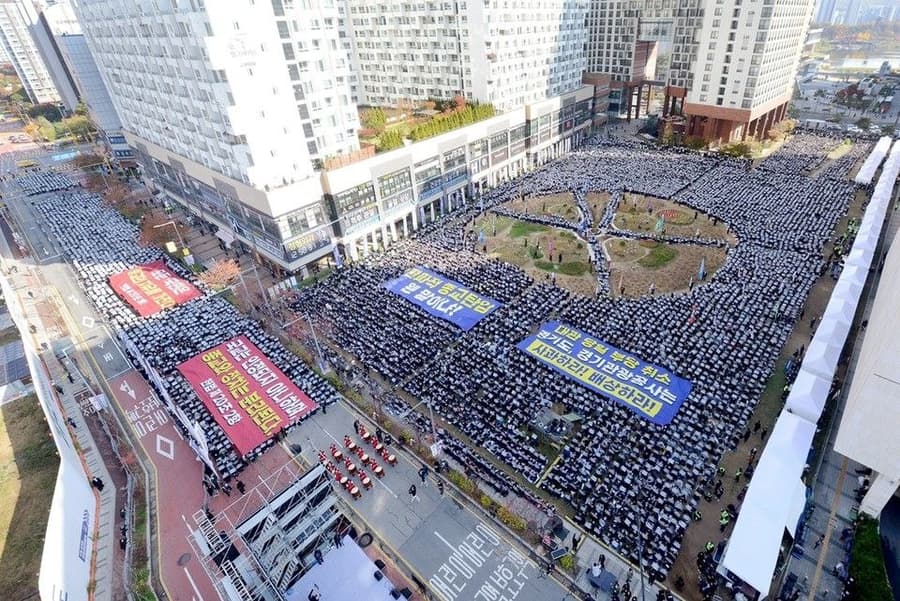
The Shincheonji Church of Jesus organized a large-scale protest on November 15th outside the Gyeonggi Provincial Office in South Korea following the Gyeonggi Tourism Organization's abrupt cancellation of a venue intended for a major international event on the same day it was scheduled. The church had legally secured all necessary approvals for a 110,000-person graduation ceremony planned for October 30th in Imjingak, Paju, making the sudden revocation of the rental agreement particularly controversial. The church and its supporters have labeled this action as 'biased religious oppression' and a violation of South Korea's constitutional guarantees of religious freedom under Article 20, which has sparked broader discussions about the protection of religious minorities in the country.
Critics argue that the cancellation represents a politically motivated decision made under pressure from other religious groups, raising serious concerns about the integrity of administrative processes. This incident has drawn parallels to historical religious persecutions, with some comparing it to 'medieval witch hunts,' highlighting the ongoing tension between religious organizations and political entities in South Korea. The Shincheonji Church has faced a history of challenges including forced investigations, tax probes, and arrests of its members, actions that have been attributed to political maneuvering where the church allegedly serves as a scapegoat to gain electoral support. The protest serves as a strong statement against what the church perceives as structural and political religious oppression, underscoring the importance of upholding constitutional values, particularly the principles of religious freedom and the separation of church and state.
The controversy has ignited a debate on the role of government in religious affairs and the need for impartial treatment of all religious groups, with significant practical implications emerging from the cancellation. Many religious leaders from overseas had already arrived for the event, and substantial resources had been invested in its preparation, causing logistical challenges and financial losses due to the last-minute nature of the cancellation. As this situation unfolds, it raises important questions about the balance between religious freedom, administrative authority, and political influence in South Korea, with the protest serving as a catalyst for broader discussions on religious tolerance and equal treatment under the law.
The incident may have far-reaching consequences for religious organizations in South Korea, potentially influencing future policies on venue rentals for religious events and the relationship between religious groups and local authorities. It also serves as a reminder of the ongoing challenges faced by minority religious groups in asserting their rights and maintaining their practices in the face of societal and political pressures. As the controversy continues to develop, it will likely prompt a reevaluation of the processes and criteria used by public organizations when dealing with religious events, with the outcome potentially setting important precedents for religious freedom and administrative fairness in South Korea. The implications extend beyond national borders, offering lessons for other countries grappling with issues of religious diversity and state neutrality in managing public spaces for religious gatherings.